
Prince George's Previous Residents by Era
No single record names every past resident at one Prince George's County address. Land books track ownership by parcel. SDAT offers a current starting point. City directory volumes and telephone books tie names to street addresses for selected years, and the federal census adds household detail once its records go public. Newspapers, permits, and Sanborn maps supply dates and context around each household. The right first source depends on the decade. Whatever the era, the resident lookup works best when the parcel's legal description travels with the street address through every step of the chain.
| Source | Years It Covers | Where Held | What It Shows |
|---|---|---|---|
| Prince George's land-record series | Surviving series from 1696; current electronic name-index start not located | MDLandRec, Maryland State Archives, and courthouse | Deeds, mortgages, releases, plats, and other instruments |
| CE411 separate index | 1966-1994 | Maryland State Archives historical series | Agreements, assignments, notices, and releases outside the ordinary index |
| SDAT parcel record | Current daily dataset; history in transfer and sales fields | SDAT web search | Current owner, premises, mailing address, assessments, and transfers |
| Polk suburban and Laurel directories | 1930-31, 1954-55, and Laurel 1962 verified | PGCMLS, PGCGS, DeMarr, and State Archives | Address, name, occupation, and business clues |
| Telephone-directory reels | Selected local years from 1933 through 1973 | Library of Congress and library microfilm | Listed subscriber and address |
| Federal census | 1790-1950 public in 2026 | NARA, Census, FamilySearch, and library databases | Household names, ages, relationships, and address geography |
Match the source to the era. For a recent transfer, open SDAT and the deed index. For a mid-century household, pair a street directory or telephone book with the nearest census. For older property, carry the legal description to the courthouse or the Archives when the online index stops short of the needed book. Maryland State Archives land-record series details list the Prince George's County volumes that still survive.
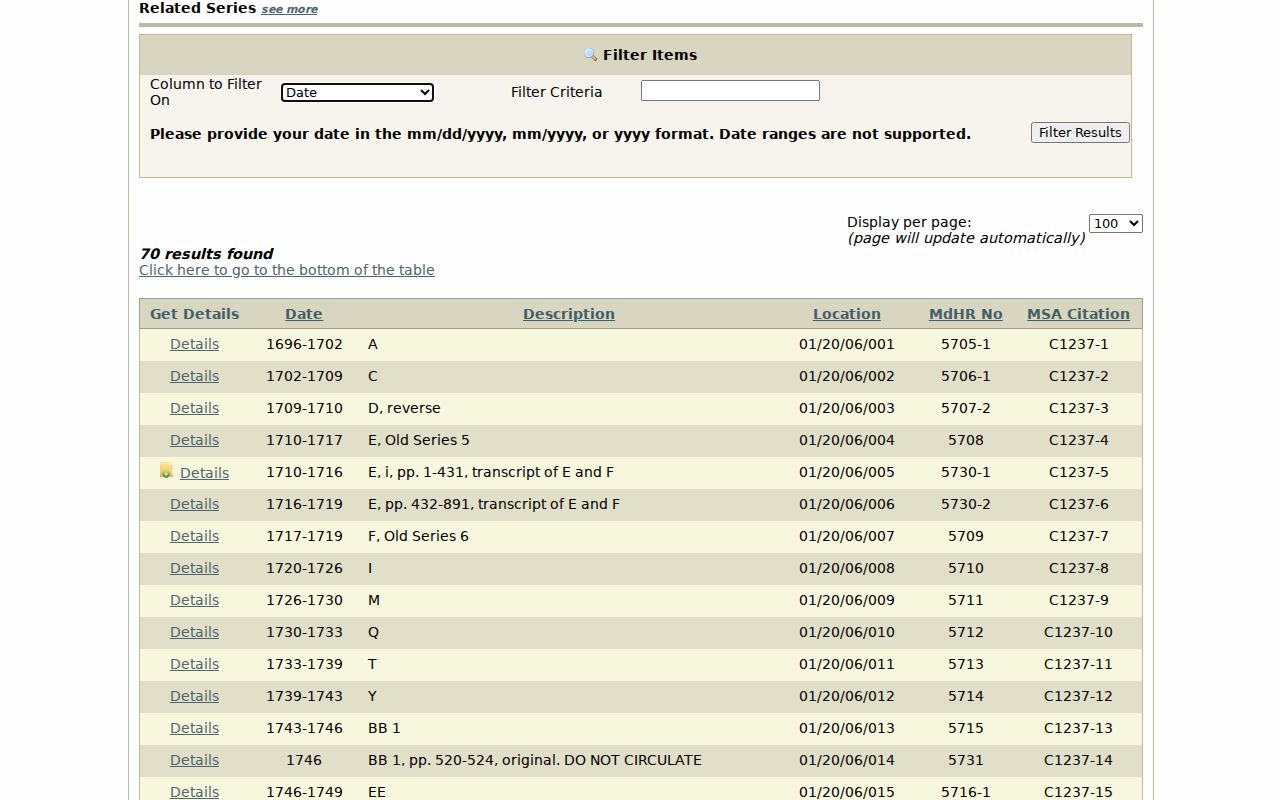
That series description is the fallback worth keeping handy whenever a modern index entry fails to show how far a historical volume reaches.
Prince George's Previous Residents Start Here
Start every previous-residents search at the Maryland Department of Assessments and Taxation. SDAT lets anyone search Prince George's County by street address, property account number, or map reference. It does not search by owner name or ZIP code. Leave off street directions and suffixes. To search a full street, drop the house number. Truncate the street name with an asterisk if spelling gives trouble. Write down the PAN, the owner of record, and the premises address. Record the mailing address, the legal description, lot, map, transfer date, and sales history too.
Treat the mailing address with care. It is where assessment notices go. It may differ from the premises. Treat it as a lead rather than proof of residence. The owner field follows the last recorded deed. It can carry abbreviations such as ET AL, ET UX, or T/E. These facts open the door to the deed index, but they will not name every past resident on their own.
Note: Keep the street address and legal description together, since a later change in numbering or postal label can split one property trail in two.
Prince George's County Deed Chain
The deed chain is how ownership runs backward for a Prince George's County address. In MDLandRec, select the county and search the current owner as a grantee. Sort the results by date. Match the purchase deed to the legal description, lot or plat, consideration, and recording date. Then open the document and read the seller, who appears as the grantor. Search that seller as a grantee to reach the earlier purchase. Keep repeating the pattern. Remember that a seller on one deed is not automatically the next household. Pair each ownership step with a directory, census, or newspaper. Do that before assigning any person to the address.
- Use SDAT to capture the current owner, PAN, legal description, lot, map, and transfer details.
- Open MDLandRec, select Prince George's County, and locate the likely purchase deed by the owner's name as grantee.
- Confirm the legal description and plat or lot. Do not rely on a shared surname alone.
- Record the seller as grantor, then search that person as grantee for the earlier acquisition.
- Repeat the match by legal description, checking document type each time and using the counter or Archives when the image or index is unavailable.
The MDLandRec login and index entry point is the online channel for both active and historical land-record functions.
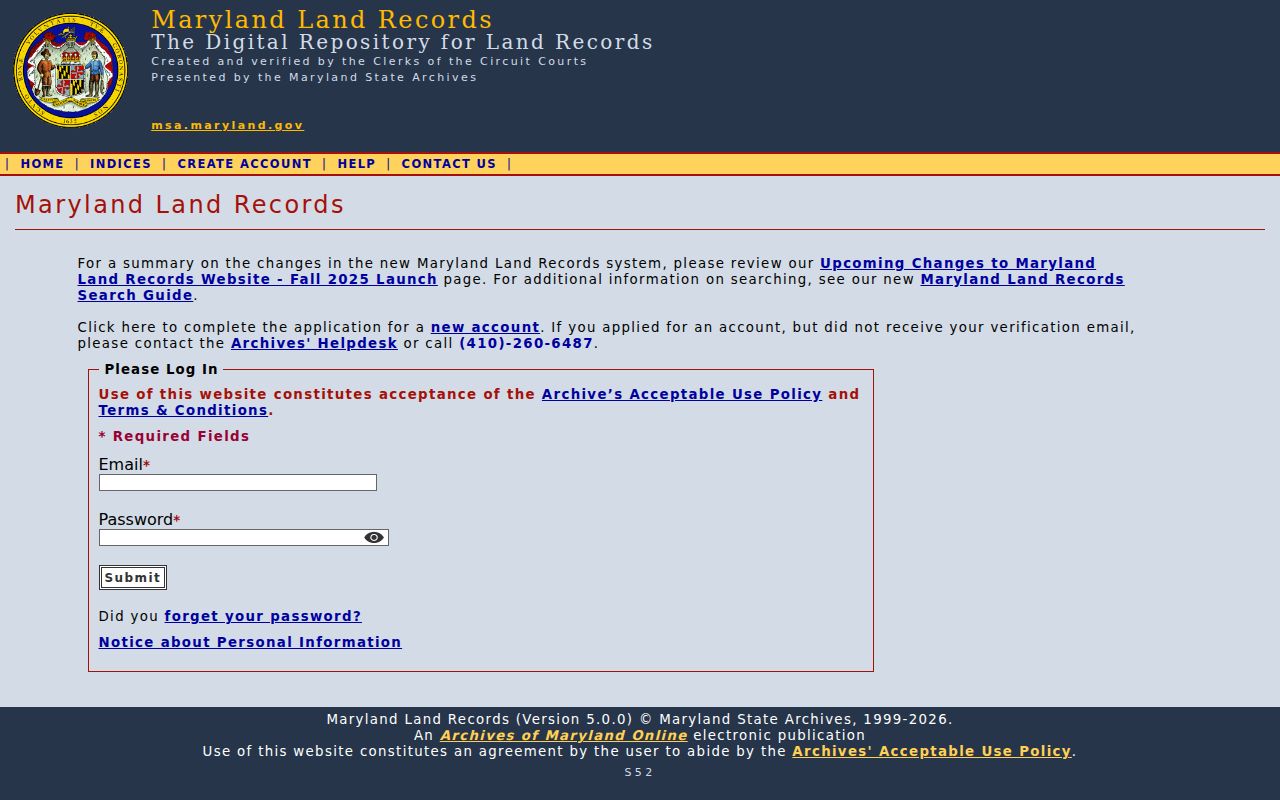
MDLandRec requires an account, and the current access terms should be checked before counting on remote images.
- Grantor
- The person or entity transferring an interest in the recorded instrument, commonly the seller on a deed.
- Grantee
- The person or entity receiving that interest, commonly the buyer on a deed.
- Chain of title
- The linked sequence of transfers for the same parcel, traced backward through confirmed documents.
- Legal description
- The lot, block, plat, metes-and-bounds, or other formal parcel description. It usually survives address changes better than a street number.
Prince George's CE411 Records Gap
One county-specific detour interrupts backward deed searches here. Prince George's County agreements, assignments, notices, and releases from 1966 through 1994 sit in Maryland State Archives series CE411. These sit outside the ordinary electronic index and the Land Records Index. A gap in that period may be a release, a mortgage satisfaction, or an assignment rather than a transfer of ownership. Read the instrument type and the parties. Do this before treating any entry as a deed.
Official MDLandRec guidance separates the historical and active index functions. For a book older than the electronic name index, use the courthouse terminal, the State Archives search room, the Archives guide, or a written copy order. The same applies to a record with no image. The Land Records clerks are custodians of the records, not title researchers. They will not build the chain for a requester. The Prince George's County court-records series offers another archival route into early county material.
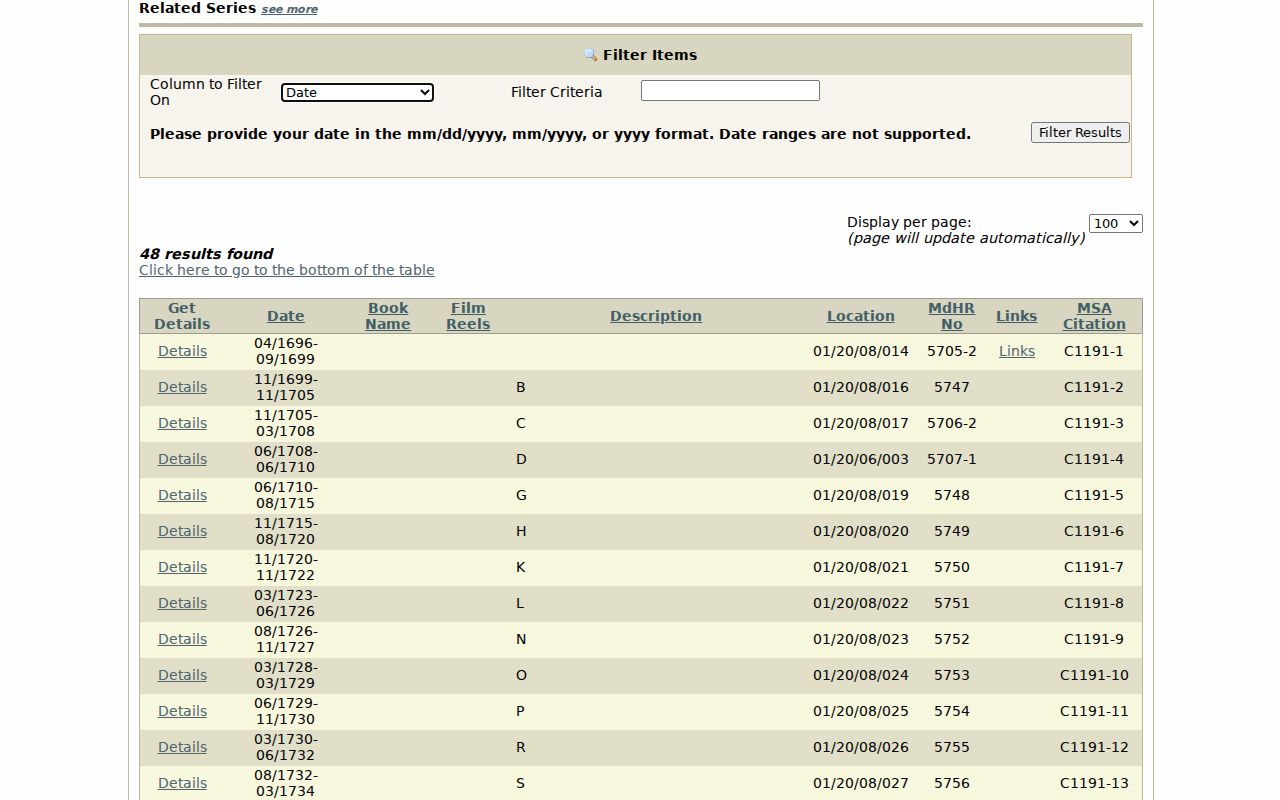
The court-series description separates archival holdings from modern web summaries and points to the right custodian whenever an index runs out.
Prince George's Legal Description Trail
Address continuity is the big trap in a Prince George's County house history. M-NCPPC assigns or approves most county street names and house numbers. Incorporated municipalities keep approval authority inside their own borders. A street can be renamed or renumbered. A postal city can even appear on mail when the parcel sits outside that city's incorporated boundary. Keep both the old and current labels. Let the legal description do the connecting. The subdivision name, lot, block, or plat ties the records together when street numbers fail.
For a subdivision, search by plat reference and subdivision name. A Sanborn map may show a structure, its lot context, and a numbering clue. It cannot name every resident. Remember that a parcel's situs, mailing address, legal description, and ZIP are four distinct identifiers. Matching only the street number is weak evidence. Neighborhoods change. County boundary and postal conventions shift over time.
Prince George's Previous Residents in Directories
Ownership is only one thread of a previous-residents search. Reverse or criss-cross directories move from an address to a listed occupant. That section exists in some editions. For Prince George's County, the historical household layers include the verified Polk suburban runs, Polk's Laurel 1962, selected telephone reels, and local library microfilm. Publisher and shelf details are described more fully on the Prince George's County Directory Book page. That page is the best place to confirm a city directory edition before relying on it.
Pair each directory year with the closest federal census. Directories can be compiled in a different month. They may be dated ahead of or behind the census. The federal census is public through 1950 under the 72-year rule. The 1960 and later schedules are not public in 2026. Test whether a name belongs to the same household. Combine the directory's address, the census geography, and a deed or assessment source rather than trusting any single record.
- Normalize the address, municipality, and old street form before opening a directory or reel.
- Search both name and address sections, with initials, surname variants, spouse terms, and widow terms where relevant.
- Compare adjacent directory years so an unlisted line or a skipped publication does not become a false conclusion.
- Match the closest public census, then test the link with a deed, assessment record, obituary, probate file, or church record.
PGCMLS Discovery Suite is one research channel for archival and genealogy digital resources.
Use a digitized result only to locate the source itself. Then preserve the title, year, page, and collection details for the household trail.
Prince George's County Maps and Permits
House-history research needs date clues as well as names. The Prince George's Room holds historic assessment books and newspapers. It also holds court material, Sanborn maps, and historic house material. DeMarr keeps files on places and individuals. The County Genealogical Society accepts research requests. It reports a library of more than 6,500 volumes, plus maps, family files, Bible records, and microforms. Ask for an old tax assessment, map sheet, historic address variation, or newspaper notice. Then carry that fact back to the deed index.
DPIE offers two address channels for permits. The legacy Permit History By Address screen uses house or building number, street name, ZIP, and a CAPTCHA. LookSee covers Momentum permits, licenses, inspections, and enforcement. Search it by street number and name or a full reference. A no-result in one does not settle the earlier history. So try the other system or an MPIA request for the record custodian's file. The Prince George's County Genealogy Library describes a local collection and research access.
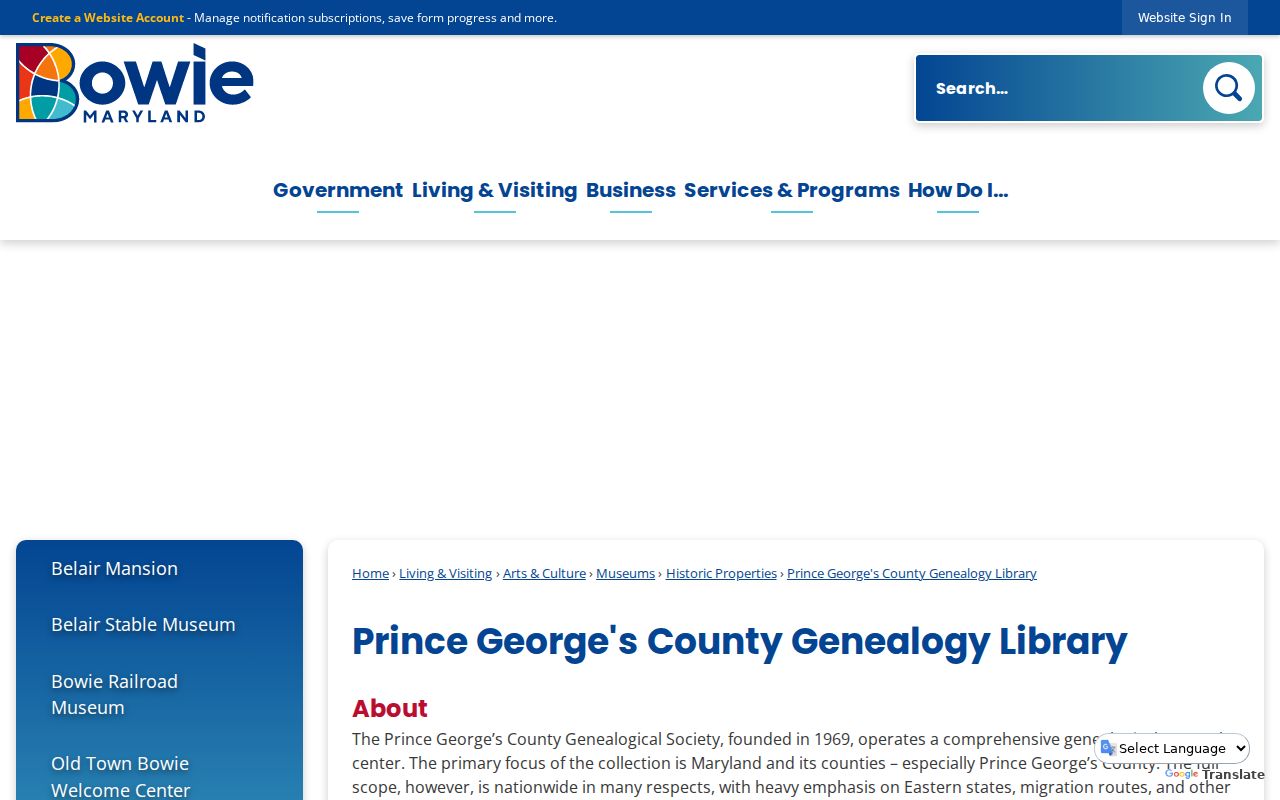
Collection staff can help locate an appropriate map, microform, or local-history source. That matters when an online deed index cannot resolve an older address.
Prince George's Resident Household Evidence
Newspapers, obituaries, cemetery records, and probate files can close a previous-residents trail. This helps once an address drops out of a directory. The Prince George's Room's microfilm includes several local papers. These are the Prince George's Sentinel, Prince George's Post, Bowie Blade, and Laurel Leader. A death notice may name a spouse, children, a former address, or a funeral home. Maryland Estate Search can identify a decedent. It also shows estate number, status, filing date, personal representative, attorney, aliases, and docket history. The full estate file comes from the Register of Wills.
These sources need confirmation. An obituary may describe family but not title to a parcel. A probate docket can identify a representative but is not a resident roll. Check cemetery transcriptions against the cemetery itself, an obituary, or an archival source. Some records are restricted or unscanned. In that case, request only the existing, specified record from its custodian. Avoid asking an office to create a new list.
Note: A deed recording date can follow settlement, and a permit can reflect an application rather than completed work, so each date needs its source label.
Prince George's Lawful House History
Past-resident research suits family history, estate and heir questions, and historic-house work. It also fits personal curiosity about a property. It is never a reason to track or contact a living person. Maryland's Safe at Home program can substitute an eligible survivor's address in public records. Protected court or voter information may not surface through ordinary searches. Do not infer a protected actual address from a mailing address. Never publish it as a directory fact.
Lawful use. Use Prince George's County previous-residents records for a documented property or family question. Maryland Criminal Law Article §§3-802 and 3-805 address stalking and misuse of electronic communications; never use research to stalk, harass, threaten, or harm anyone.
Prince George's Previous Residents Fallbacks
Some Prince George's County records never made it online. That does not mean they are out of reach. MDLandRec, the courthouse counter, and the State Archives each hold a different slice of the land-record record set. A deed or deed book that one channel lacks may sit with another. The Prince George's Room, DeMarr, and the Genealogical Society serve as local-history fallbacks. They cover street directories, maps, and old newspapers. When a county agency holds the record, a Maryland Public Information Act request works best. Name the address, the date range, the record type, and any reference number you already know.
The Act itself, General Provisions Article §§4-101 through 4-601, sets the clock. A custodian must act on a written request promptly. The grant or denial can take no longer than 30 days. If the work will run past 10 working days, a notice is due within 10 working days. It must include an estimate, fees, and the reason. The county treats the first two hours of search time as free. It then charges reasonable costs for searching, preparation, or copying. No agency has to build a record that was never created in the first place.
Archival research runs on a different fee sheet. Maryland State Archives search and copy fees lay out what self-service and staffed order options cost.
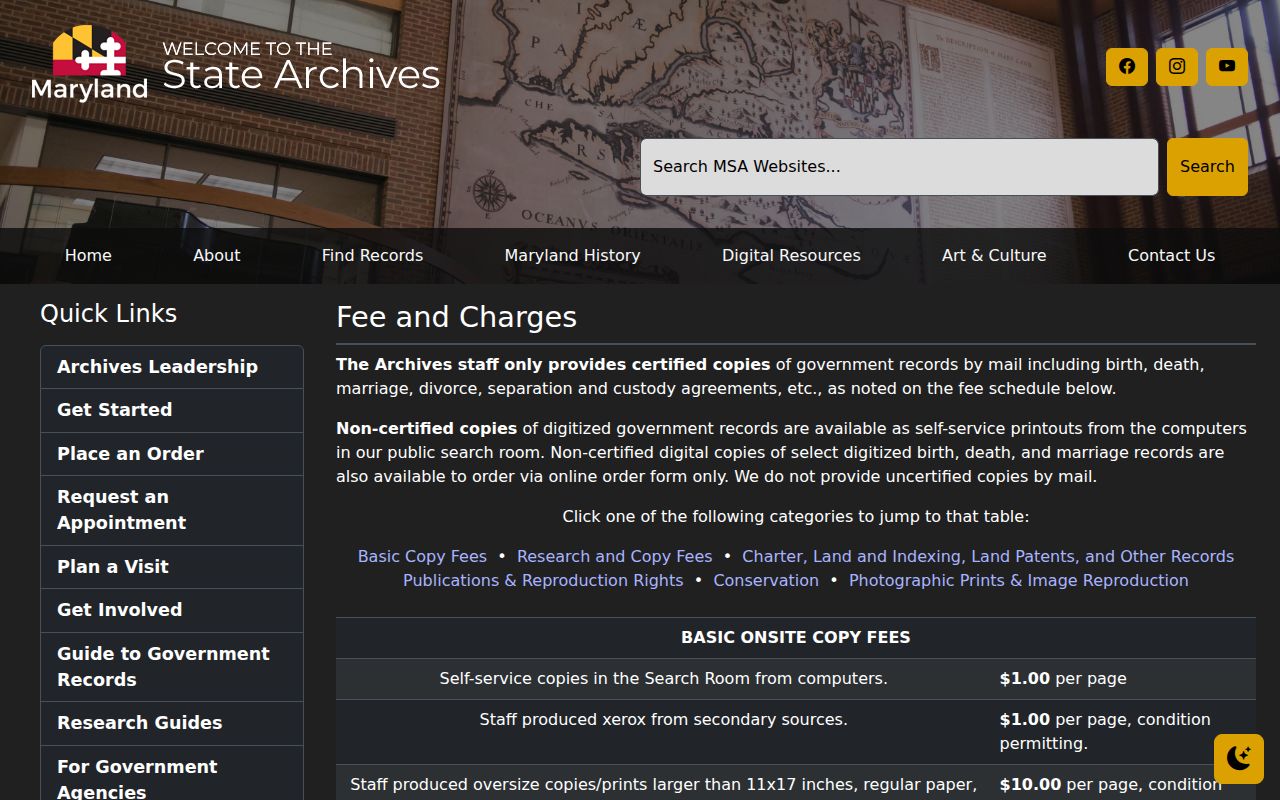
One habit saves money in Prince George's County. Ask the archive, library, or custodian for the exact record series and copy route before paying for a broad search.