
Prince George's County Resident Lookup Sources
Start with what you already know: a name, a street, maybe a rough date. A Prince George's County resident lookup gets stronger when you compare records kept by separate public custodians. That beats trusting one hit. A parcel entry ties land to an owner of record. A court index separates people through court, role, and date. Older trails often lead to archives and libraries. Two independent records pointing at the same person beat a familiar-looking single result. That simple habit makes any residents directory search far more reliable.
| Record | What It Confirms | Where | Access |
|---|---|---|---|
| SDAT parcel | Owner of record, situs and mailing addresses, legal description | Maryland SDAT | Free address, PAN, or map-reference search |
| Land record | Grantor, grantee, recorded date, instrument and legal description | MDLandRec | Account or custodian counter |
| Case summary | Party role, court, filing date, case type and status | Maryland Case Search | Free public summary, subject to exclusions |
| Estate record | Decedent, personal representative, attorney and docket clues | Maryland Estate Search | Estate Search from 1998, file through local Register |
| Vital record | Birth, death, marriage, or divorce facts when access rules permit | Maryland Division of Vital Records | Eligibility rules and Archives channels apply |
Treat a business filing or professional-license result as a clue, never as proof of home. Maryland Business Express can pull an entity by business name or Department ID. The state license query accepts a last-name search. Both may surface name variants, status, or a filing trail. Still, an entity address or license tie says nothing about where a person actually lives.
Prince George's County Resident Case Search
For a name-first resident lookup, Maryland Judiciary Case Search narrows the field well. Choose the trial-court search and Person/Company. Add Prince George's County, a court system, and a filing-date range when you can. The default match is exact. Partial surnames work with a wildcard. Type the first letter plus %. A first name can be skipped or end the same way. Results cap at 500. Tighten any broad surname before trusting a match. Careful filtering turns the court index into a genuine lookup tool.
| Case Search field | How it works |
|---|---|
| Court Type | Required choice of Trial or Appellate. |
| Name search | Last name is required; first and middle names help narrow the result. |
| Party Type and Case Type | Optional role and matter filters help separate similar names. |
| County and Court System | Use Prince George's plus District or Circuit where known. |
| Filing Date | An optional date range reduces a long result set. |
The Maryland Judiciary guidance for Case Search lays out the exact field rules and limits that shape a Prince George's County resident lookup.
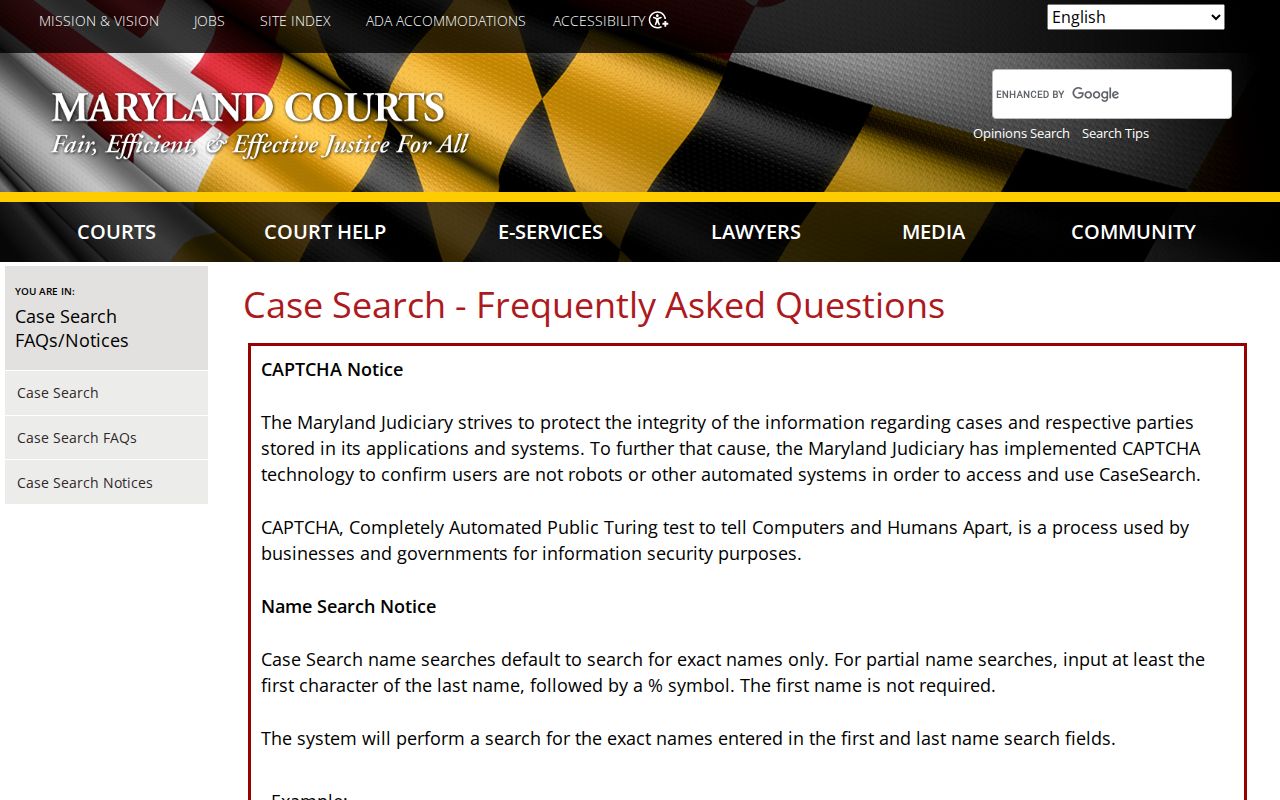
Let those fields shrink the result set. Then weigh the party role, court, and date against each other. Also weigh any public date of birth. A court listing can carry a stale address or none at all.
Note: Case Search is a public summary, not a full court file. It is not proof of a current residence.
Prince George's County Resident Case Results
A single result can carry plenty. It may list a case number, party name, public date of birth, party type, court, case type, status or disposition, filing date, and caption. Open it for still more. You may also see reference numbers, attorneys, scheduling, judgment, document, and service details. A docket is simply the court's running log of events in a case. It is not a certified copy. That separate document comes from the custodian with the court's own certification attached.
| Result field | What it tells you |
|---|---|
| Case number and caption | Identifies the matter and the case's displayed title. |
| Party name and role | Shows the listed person and party position, not a residence finding. |
| Court, type, and date | Helps separate similarly named people by forum, case category, and filing date. |
| Status or disposition | Shows the recorded case state or outcome when public. |
| Documents and service | May appear in details, but the web result is not the complete clerk file. |
- Index
- A searchable list that points to a record, often without containing every page of it.
- Image
- A scanned record page or document view. Online availability varies by record and access rule.
- Disposition
- The case outcome or current result recorded by the court.
- Certified copy
- A copy supplied and certified by the record custodian, rather than a saved web page.
Some matters stay hidden or limited. Juvenile, adoption, certain family financial, sealed, shielded, expunged, victim-address, and other confidential cases are among them. For the underlying paper or an archived file, ask the Prince George's County clerk about the case number. Ask too about the retrieval route and the current copy or certification fee. A public kiosk sometimes displays more than the web summary. Even so, the clerk's official file remains the real record.
Verify Prince George's County Resident
Verification is really record matching. Connect records created for separate purposes and see where they agree. Keep every variant of the name on hand: middle initial, suffix, former surname, hyphens, apostrophes. Same-name collisions are common in a county this large. An SDAT owner abbreviation or last-deed owner never lists everyone at a parcel. Anchor the person twice. Name plus legal description works. Name plus a public date of birth and court also works. So does name plus spouse and a dated directory entry.
- Write down the known name spelling, address, municipality or postal city, and a useful time period.
- Search Case Search with Prince George's County, a court filter, and a date range. Compare party role, caption, and date before keeping a result.
- For a known address, search SDAT by address or PAN. Capture the situs address, owner mailing address, legal description, transfer date, and owner of record as separate facts.
- Use the owner name in MDLandRec and match the deed's legal description, recorded date, and parties. A matching deed supports a property connection.
- For a death or inheritance question, compare Estate Search, an obituary, probate material, and an Archives or vital-record route permitted for that record.
The voter lookup is not a name-to-address engine. It demands first name, last name, date of birth, ZIP code, and street number. A middle initial is optional. What it returns is a voter's own registration and polling information. That suits someone checking a personal entry. It is simply not a public browse tool for Prince George's residents.
Prince George's County Lookup Paths
Different questions lead to different custodians. Estate Search can surface a decedent, personal representative, attorney, or docket. From there you can reach the local Register of Wills file. Hunting a former classmate? Yearbooks, school histories, newspapers, and collections usually serve better than current records. The Prince George's Room, DeMarr Library, and the Prince George's County Genealogical Society hold these materials. A birth-parent question belongs on Maryland's official adoption-record or confidential-intermediary route, not public guessing. Confirm the current state program with Maryland Department of Human Services before applying.
The Estate Search glossary explains the estate fields, types, statuses, and county options on this record path. It clarifies each choice along the way.
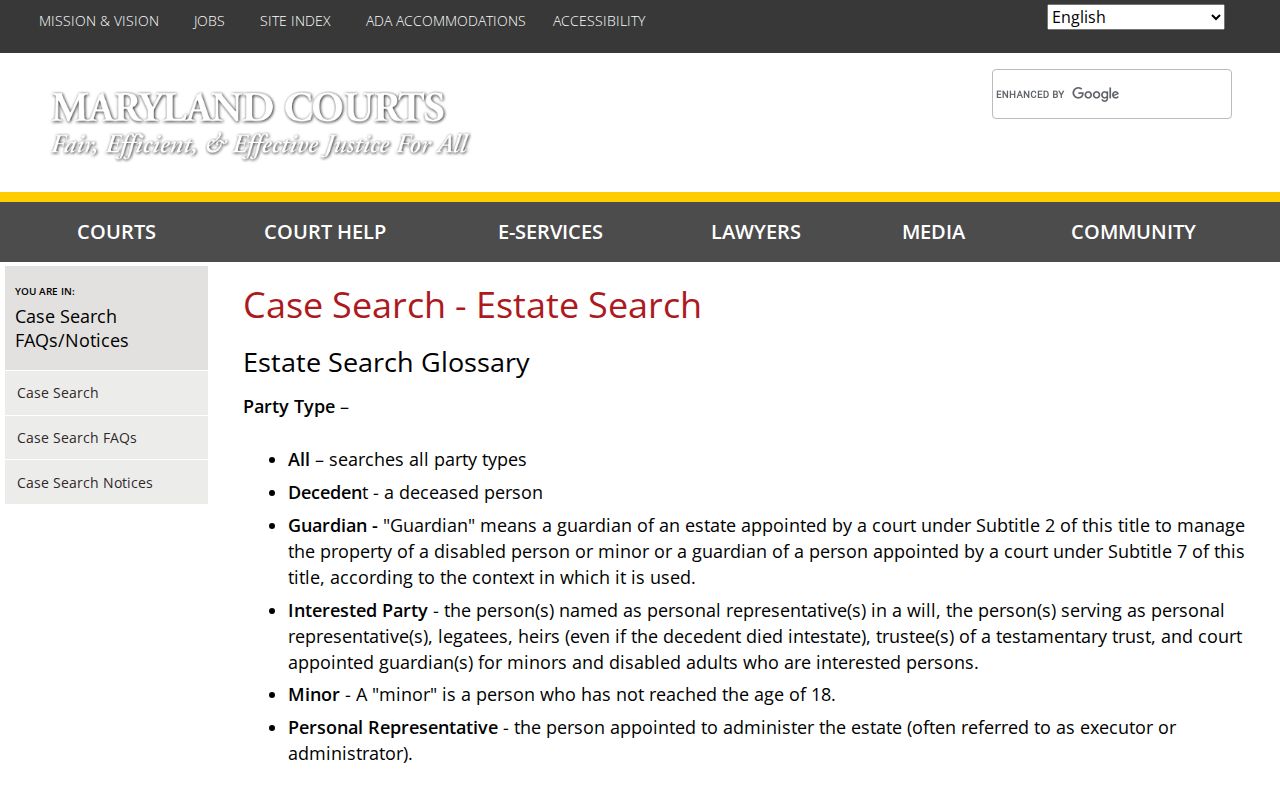
An estate index may name a responsible person. It can also give case context, yet the full probate file stays with the custodian. For older local research, the library and Archives often beat a current-record search. Past residents leave paper trails in both places.
Note: A business, license, or association listing shows an affiliation, not a current home address.
Prince George's County Resident Vital Limits
Maryland treats vital records differently depending on type and age. Current service records come from the Division of Vital Records. Older indexes and unrestricted material sit with the Maryland State Archives. Under State Government Article §9-1015, an archived birth older than 100 years can become unrestricted on the statute's terms. The same statute applies to a death older than 10 years. Health-General §4-217 governs who may obtain certified or abridged copies. Birth, death, fetal-death, and marriage records all fall under it. A divorce verification is not a decree. The decree itself comes from the Circuit Court. The Division of Vital Records service page names its custodian role and the record years. It also posts current service notices.
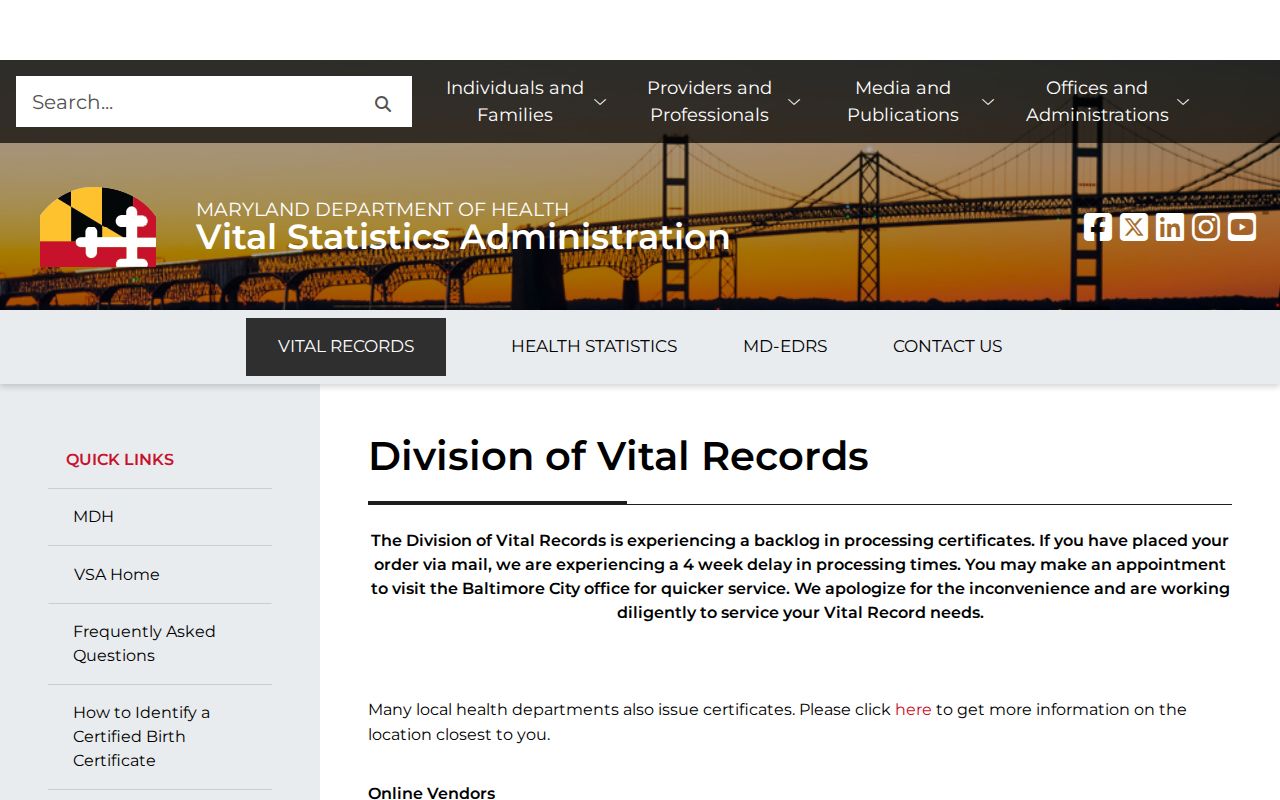
That division's screen is a useful prompt. Confirm eligibility before ordering anything. When a current certificate is restricted, older indexes, Archives material, parish records, cemetery compilations, and newspaper notices can still supply lawful historical context, though none of them substitutes for the certificate itself.
Prince George's County Records Requests
An online index can identify a record without showing enough. In that case, contact the office holding the original. The Maryland Public Information Act, General Provisions Article §§4-101 through 4-601, opens a request path for public records. An exception can apply in some situations. Under §§4-202 through 4-206, a custodian must generally act promptly. The outer limit is 30 days. If more than 10 working days are expected, the requester should get a notice. The notice should explain the reason, along with estimated time and fees. An agency never has to create a record that does not exist.
A written request works best. Send it to the appropriate custodian. Name the person, date range, and record type. Also include any case or instrument number, and the format wanted. County guidance sets the first two hours of search time free. Reasonable costs are allowed after that. A denial should state its reasons. The Public Access Ombudsman and the Compliance Board offer possible review routes. Court records, vital records, and protected files each keep their own access rules.
Prince George's County Lookup Privacy
Maryland offers no single deletion switch for public records. Protected categories cover many vital records, juvenile and sealed court files, protected voter information, and motor-vehicle data under the federal Driver's Privacy Protection Act. Maryland Safe at Home gives eligible survivors and qualifying household members a legal substitute address. Court victims and witnesses can seek address or telephone shielding. One caution deserves emphasis. A mailing address in a property record may differ from the parcel's situs address, and it should never be treated as a declaration of residence. The Maryland Safe at Home information explains eligibility, application-assistant support, and address protection.
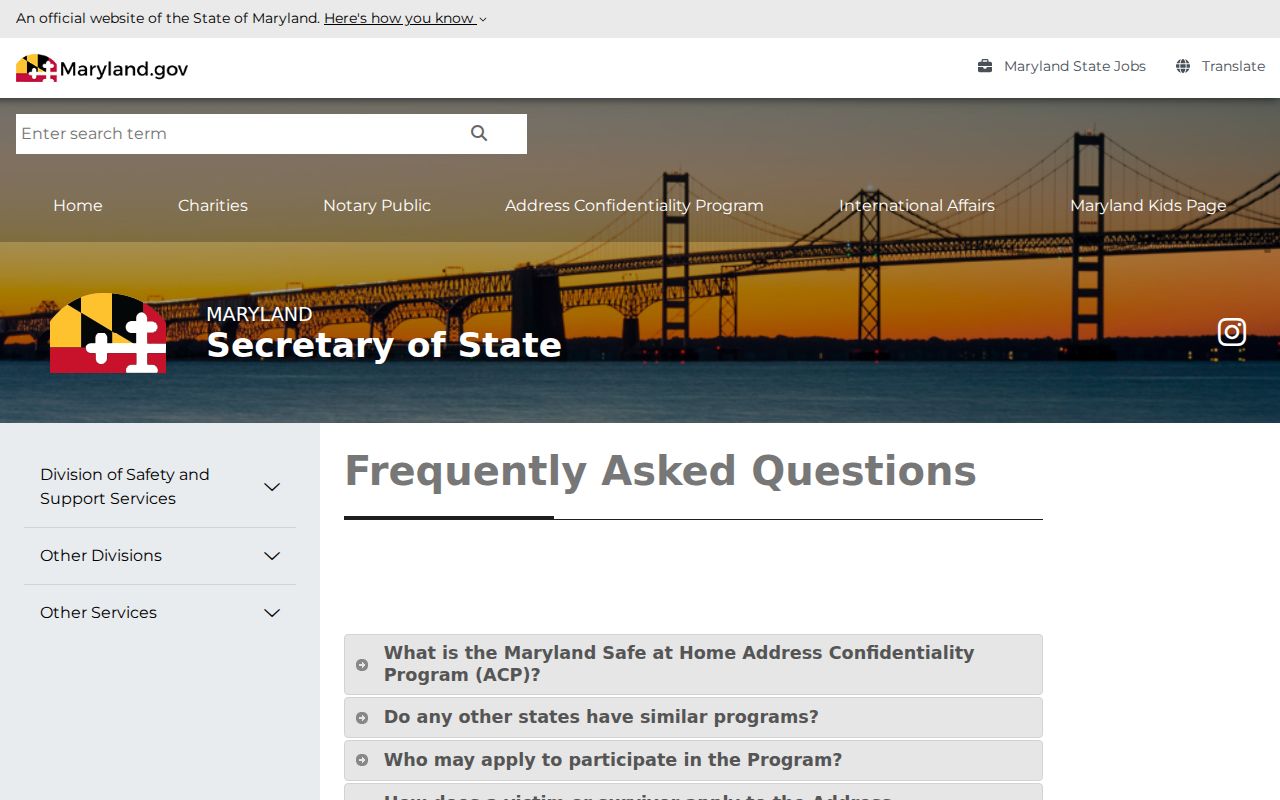
Only the originating custodian can correct a public record. That custodian may be SDAT, the court, the elections office, the Division of Vital Records, or the land-record office. A third-party removal request never amends the official record.
Lawful use. Use a Prince George's County resident lookup for personal, lawful research, family history, estate work, or a record question. Maryland Criminal Law Article §§3-802 and 3-805 prohibit stalking and misuse of electronic communication; never use records to monitor, threaten, harass, or expose a protected person.